Last Updated on March 16, 2026 by Aram Vardanyan
The Armenian alphabet is one of the oldest writing systems still in continuous use, and it remains a cornerstone of Armenian cultural identity.
In this article, I will talk about Armenia letetr and alpabet for first-timers who want to get familiar with our ancient language.
The written word is strange when you think about it: sounds turned into symbols, symbols turned into meaning.
In a world where text is typed, copied, and automated, it’s easy to forget how radical writing really is.
Writing isn’t only a tool for communication. It’s a memory road, and sometimes, a road to eternity. Armenians have often been described as an “eternal nation.”
And whether you like that phrase or not, one thing is hard to deny: the Armenian alphabet has been a major reason the Armenian language and identity survived across centuries of upheaval.
Because without a script that could carry the language forward, Armenian might not have remained Armenian — at least not in the form we know today.
This article is a first approach to one of the world’s oldest and most intricate alphabets still used daily: the Armenian alphabet.
Armenian Alphabet: Quick Overview
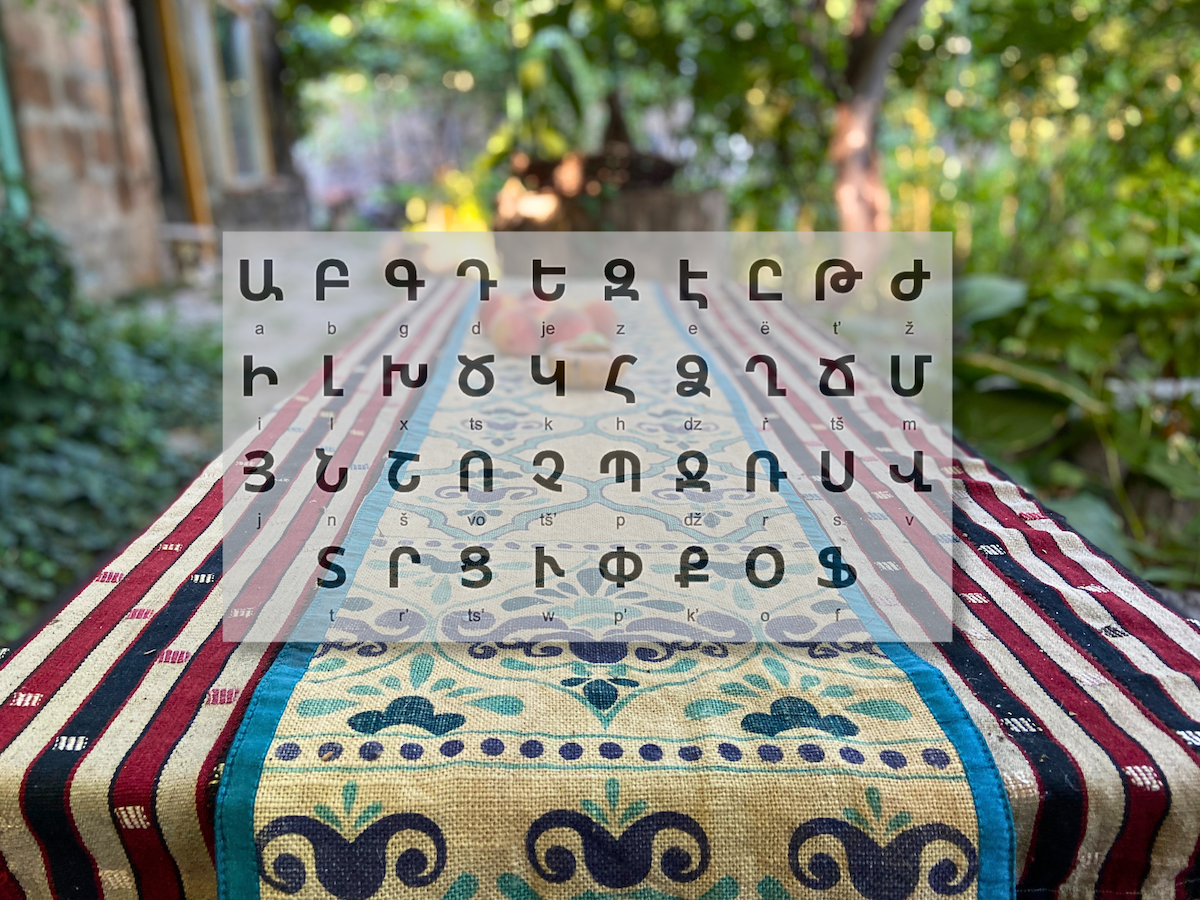
The Armenian alphabet is the writing system used for the Armenian language. It was standardized in 405 AD, traditionally associated with Mesrop Mashtots, and today includes 38 letters.
Armenian Alphabet Quick Facts
- Language: Armenian
- Letters today: 38
- Original letters: 36
- Direction: Left to right
- Standardized: 405 AD
- Associated with: Mesrop Mashtots
Armenian Alphabet Characteristics
With 38 letters, Armenian handwriting is known for its elegant, complex strokes.
Armenian is written horizontally from left to right. In everyday life, separate (“block”) writing is more common than fully cursive writing, though both exist.
One reason Armenian can feel difficult to “map” onto English is phonetics: the language has a rich inventory of sounds, and some Armenian letters don’t have a perfect one-to-one equivalent in English.
Its letter order and some forms resemble the Greek tradition, while parts of its punctuation history reflect later cultural contact.
But overall, Armenian remains one of the world’s most distinctive and historically continuous alphabets, and its story is often simplified or misunderstood.
Armenian Alphabet History
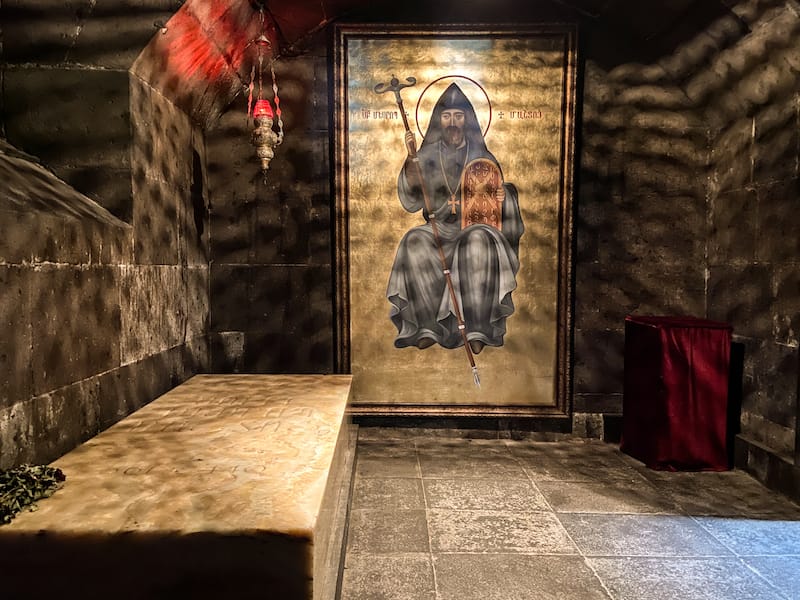
Tradition credits Mesrop Mashtots — a scholar, clergyman, and linguist – with creating the Armenian alphabet in 405 AD, after being tasked with developing a script that accurately represented Armenian speech sounds.
Legend even says the letters came through divine revelation during prayer.
In practice, language history is usually more human than miraculous.
Some historical accounts suggest earlier Armenian writing systems or proto-scripts may have existed long before 405 AD, but the record is fragmentary and debated.
What is clearer is that by the late 4th century, after the political division of Armenia between the Roman/Byzantine sphere and Sasanian Persia, Armenians often used Greek, Persian, and Aramaic scripts for practical writing.
Mashtots’ achievement, then, can be understood as something both cultural and political: standardizing a script that could serve education, administration, and especially religious translation, giving Armenians a strong written foundation at a moment when identity was under pressure.
That foundation is the core of the alphabet still used today.
The Alphabet and Armenian Identity
An official alphabet supported by both the monarchy and the Church helped standardize Armenian communication, literature, and religious life, a major advantage in the Early Middle Ages.
Over time, contact with neighboring cultures and languages influenced Armenian usage. Two letters, Օ /o/ and Ֆ /f/, were added later, expanding the alphabet from 36 to 38.
To this day, many Armenians still recite the alphabet ending as:
“և օ ֆ”, literally “and O, F”, a small oral echo of the alphabet’s evolution.
Soviet Reforms
In the 20th century, Soviet language reforms aimed to simplify spelling and grammar under the “write how you speak” principle.
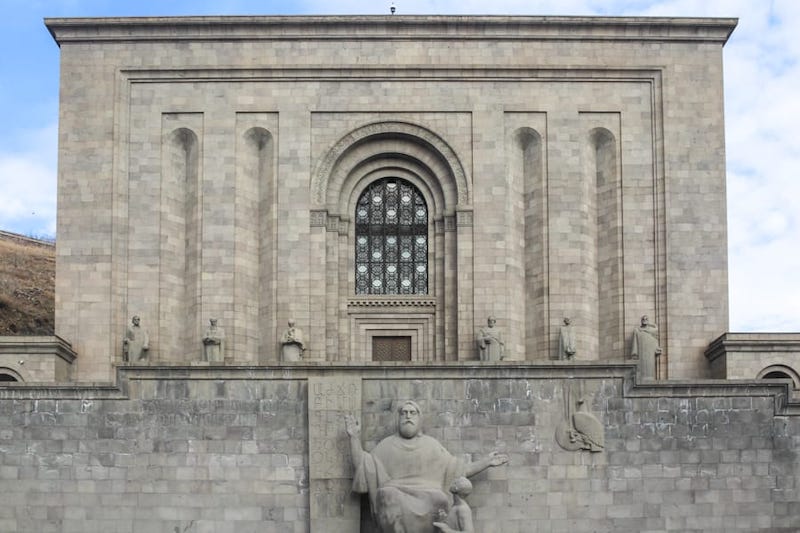
The reforms did not reorder the alphabet or remove letters, but they did create a cultural divide: Armenians inside the Armenian SSR adopted Soviet standards, while many Armenians outside the USSR continued using traditional spelling conventions.
That split reinforced differences already present between Eastern and Western Armenian.
Eastern vs Western Armenian
The deeper roots of the divide trace back to 387 AD, when Armenia was partitioned between major empires — a political split that shaped regional development for centuries.
Two main branches gradually formed:
Eastern Armenian
Mainly spoken in Armenia and Iran.
Western Armenian
Spoken primarily in the Armenian diaspora.
Both use the same alphabet, but differ in pronunciation, vocabulary, and certain grammatical conventions.
Western Armenian absorbed more vocabulary from Turkish and Arabic in many communities, while Eastern Armenian incorporated more Russian and Persian loanwords.
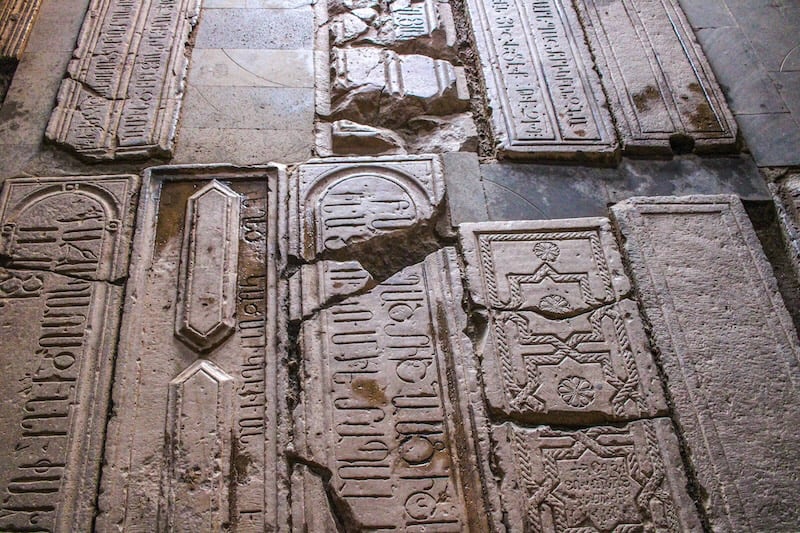
Western Armenian is widely considered endangered today, and that endangerment represents a real loss of cultural and linguistic diversity.
Armenian Alphabet Art: Trchnagir
Armenians even developed an artistic tradition centered on the alphabet.
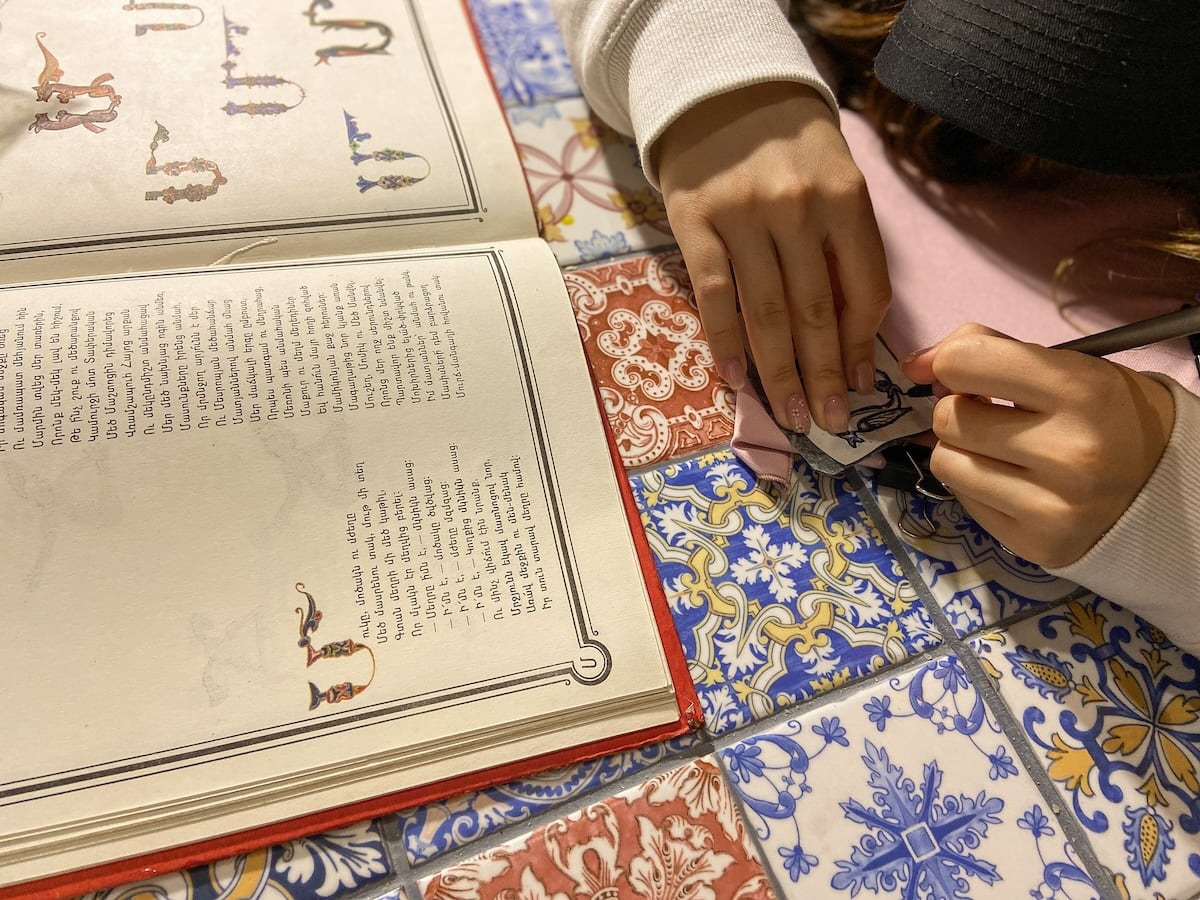
Trchnagir (also spelled Trchnakir), meaning “bird letters,” is a calligraphic style in which Armenian letters are formed from birds in different poses, each character shaped by its pose.
The tradition dates back centuries and continues today as a living celebration of language.
Armenian Alphabet Monument
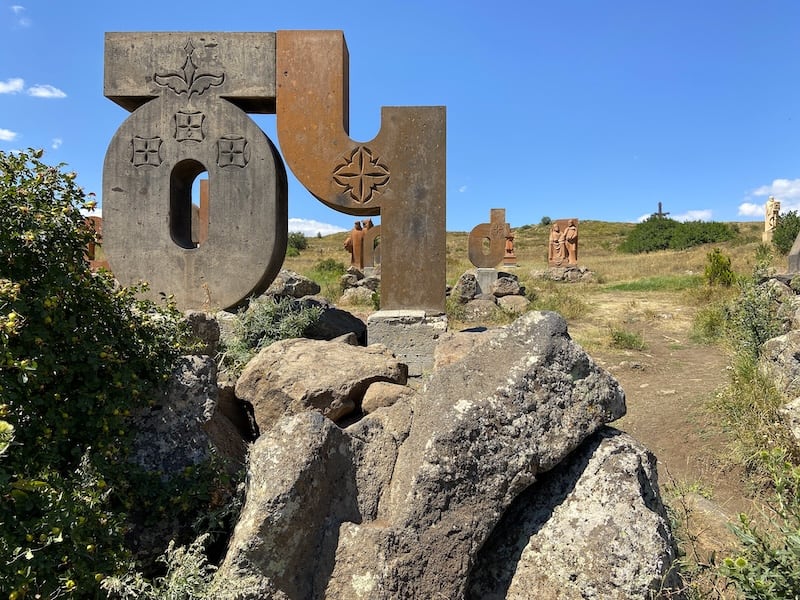
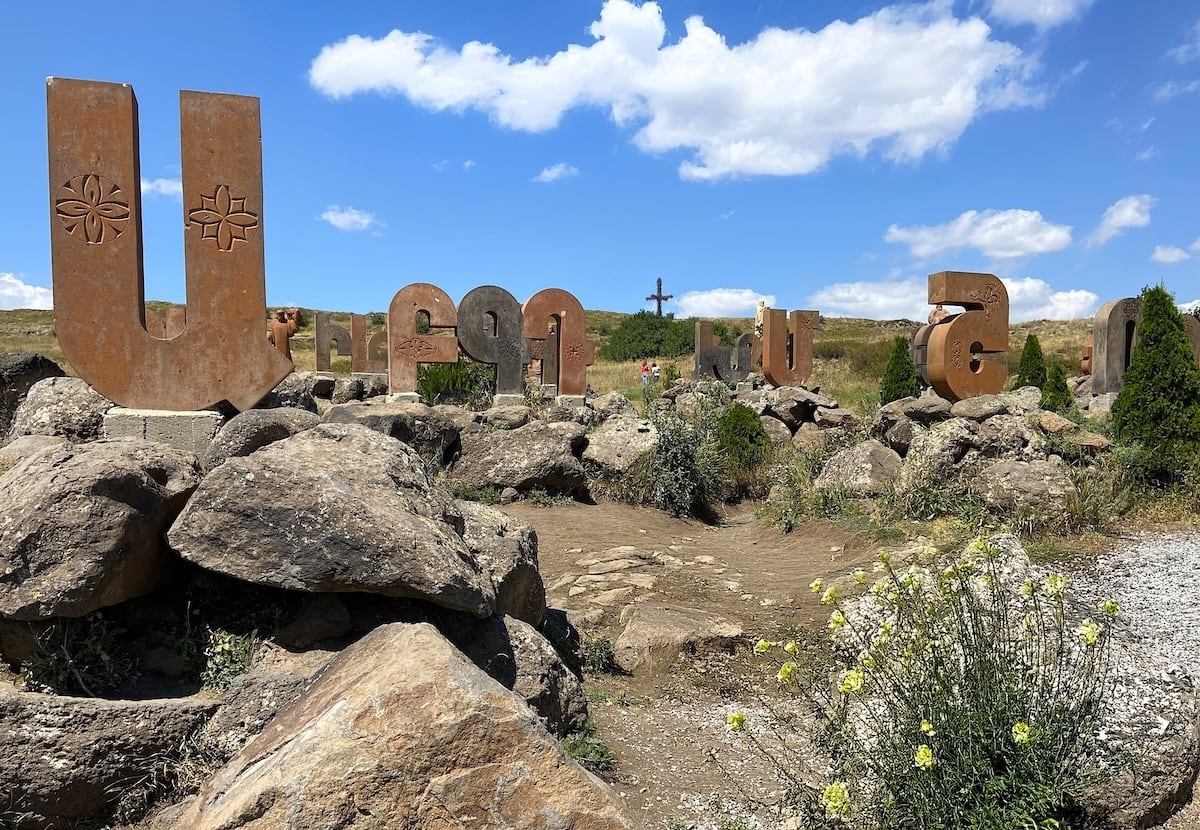
There is also a dedicated Armenian Alphabet Monument featuring large stone sculptures of the letters.
It sits about an hour north of Yerevan, between Ashtarak and Aparan — a striking reminder that language isn’t just communication in Armenia. Its identity is made visible.
Final Thoughts
Writing is one of the most human things we do, a way to preserve thought, carry memory, and outlive the moment.
And Armenia, an ancient civilization, living language, and unique alphabet, is a place where that truth feels unusually tangible.
Come to Armenia and see it for yourself. However, that may be worth another article.
Frequently Asked Questions about the Armenian Alphabet
What is the Armenian alphabet?
The Armenian alphabet is the writing system used for the Armenian language. It consists of 38 letters and was standardized in 405 AD.
Who created the Armenian alphabet?
It is traditionally credited to Mesrop Mashtots, a scholar, linguist, and clergyman.
How many letters does the Armenian alphabet have?
The modern Armenian alphabet has 38 letters. The original version contained 36 letters.
Is Armenian written left to right?
Yes — Armenian is written from left to right, like English.
Do Eastern and Western Armenian use the same alphabet?
Yes. Both use the same alphabet, though pronunciation, vocabulary, and some grammar differ.
Why is the Armenian alphabet important?
It helped preserve the Armenian language, literature, and identity across centuries of foreign rule and cultural pressure.
Is Western Armenian endangered?
Yes. Western Armenian is commonly classified as endangered, with shrinking numbers of native speakers.