Last Updated on March 28, 2026 by Aram Vardanyan
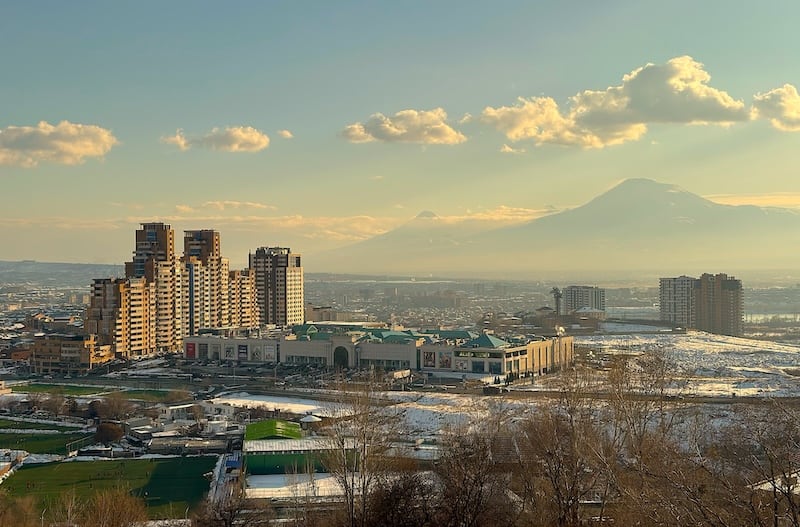
Yerevan is a vibrant, beautiful city best appreciated from a panoramic viewpoint, especially on clear days when Mount Ararat appears in the distance.
The Tsitsernakaberd Armenian Genocide Memorial Complex is one of the most meaningful places to take in those views. As an Armenian, it’s also an important site for me to share with travelers, a peaceful space that reflects Armenia’s resilience and history.
In this guide, I will explain how to visit the Tsitsernakaberd Armenian Genocide Memorial in Yerevan, provide a brief overview of its history, outline what to do when visiting the grounds, and share the best ways to get there.
If youʻre booking your trip to Yerevan last minute, I have you covered. Below are some of the top tours, hotels, and more!
🇦🇲 Top Experiences and Tours in/from Yerevan:
- Day Trip to Khorvirap, Noravank, and Areni Winery (top-rated day tour from Yerevan!)
- Garni Temple & Geghard Tour with Lavash Baking Day tour (also a popular day tour!)
- Tsaghkadzor & Lake Sevan Guided Tour (wonderful nature tour from Yerevan!)
- Private Walking Food Tour with 6 Tastings (recommended food tour in Yerevan!)
🛌 Top Hotels in Yerevan:
- The Alexander (luxury option + SPA, authentic dining venues, indoor pool!)
- Daniel’s Boutique Hotel (mid-range in excellent location!)
- 14th Floor (in the center with a wonderful view of Mount Ararat!)
- Grand Hostel (budget option in Yerevan!)
🚗 Looking for the best way to get around Armenia? Click here to check rental car rates for Armenia!
🏥 Looking for the best insurance for traveling to Armenia? Click here to check insurance rates for Armenia!
How to Visit Tsitsernakaberd Armenian Genocide Memorial in Yerevan: + Best Viewpoint
Quick Guide
- What it is: Tsitsernakaberd Genocide Memorial Complex (Armenian Genocide Memorial) in Yerevan
- Time needed: 1–2 hours (memorial grounds), 2–3 hours (with museum)
- Cost: Grounds free; museum entry free (donations welcome)
- Best for: City views + history + quiet, reflective visit
- Best way to get there: Yandex or GG rideshare (most convenient)
- Best time for views: Late afternoon / golden hour (clear days may include Mount Ararat)
How to Visit Tsitsernakaberd Armenian Genocide Memorial in Yerevan?
There are several means of transportation for visiting the Tsitsernakaberd Genocide Memorial Complex, though some are easier than others depending on the time of year!
Tsitsernakaberd is situated along the Hrazdan Gorge, very close to the Dalma Garden Mall. After exiting from Tsitsernakaberd Highway, an uphill path will take you to the complex.
There, you will emerge into the parking lot at the base of the complex. If you choose to drive yourself to Tsitsernakaberd, know that parking is free of charge for all visitors.
The most accessible way of reaching Tsitsernakaberd is by way of using ride share applications, such as Yandex or GG.
Visitors are brought directly to the base of the complex, whereas walking to the complex from the Hrazdan Bazaar requires going uphill toward the complex.
From the city center, these ride shares range from 800 AMD to 1500 AMD (≈ $2–$4 USD), depending on time of day and surge pricing.
If the weather is cooperative and you’d like to make the trek toward the complex yourself, public transportation is always an option.
From the city center, several buses can take you to the area just below the complex, conveniently located at the entrance to the Hrazdan Bazaar:
- 1 Bus Line
- 27 Bus Line
- 33 Bus Line
- 36 Bus Line
These bus lines are located at the intersection of Beyrut Street and Khorenatsi Street in the city center, in front of Children’s Park.
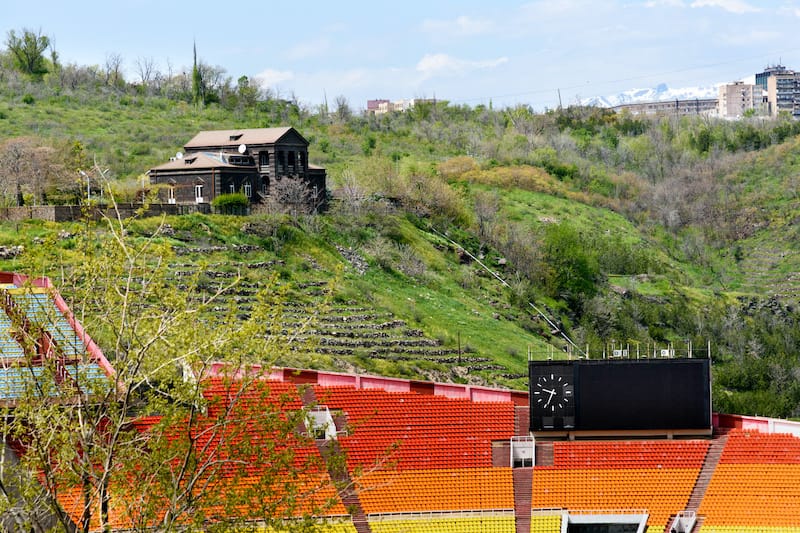
Upon arriving at Brazil Square, a back road between Hrazdan Stadium and the lot containing the bazaar will take you toward the complex.
I recommend using Yandex Maps for a more detailed explanation of routes and as an excellent visual guide for the best path toward the complex.
Address: 8, 8 Tsitsernakaberd Hwy, Yerevan
Website: The Armenian Genocide Museum
How Much is the Genocide Museum Entrance?
Entry is FREE (donations are welcome and much appreciated), but guided tours are also available:
- Armenian-language tour: 5,000 AMD (≈ $13 USD) per person
- English/Russian/French/German tour: 7,000 AMD (≈ $18 USD) per person
Coming up the stairs from the museum brings you back to the complex’s central thoroughfare, where the views open up immediately to your right.
Set along the Hrazdan Gorge above the city center, Tsitsernakaberd offers an almost panoramic look over Yerevan, and on a clear day, you can even catch Mount Ararat in the distance.
There’s also a central viewing platform that’s one of the best spots in the city for landscape photography.
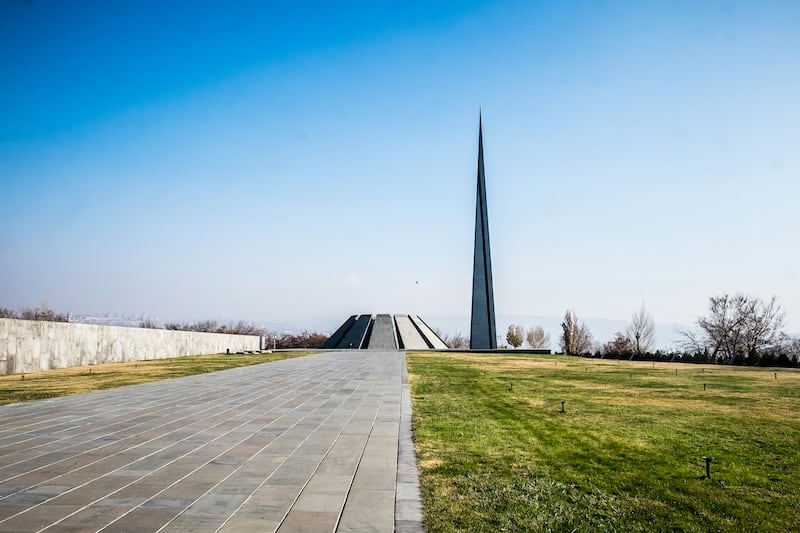
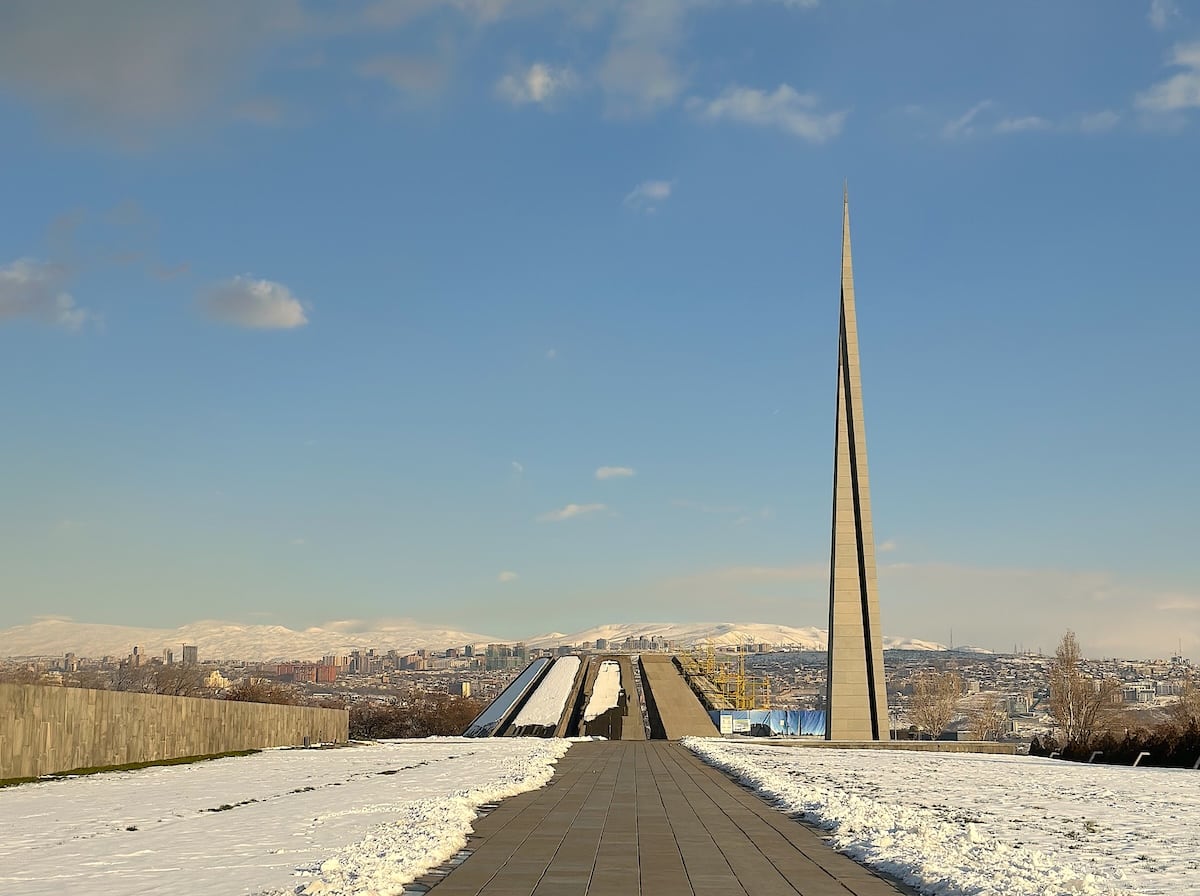
As you continue toward the center, three key structures come into view.
On the left is a memorial wall inscribed with the names of towns and villages lost during the genocide, along with plaques honoring those who aided survivors.
In winter, reaching it may mean walking through snowpack, but it’s worth the effort.
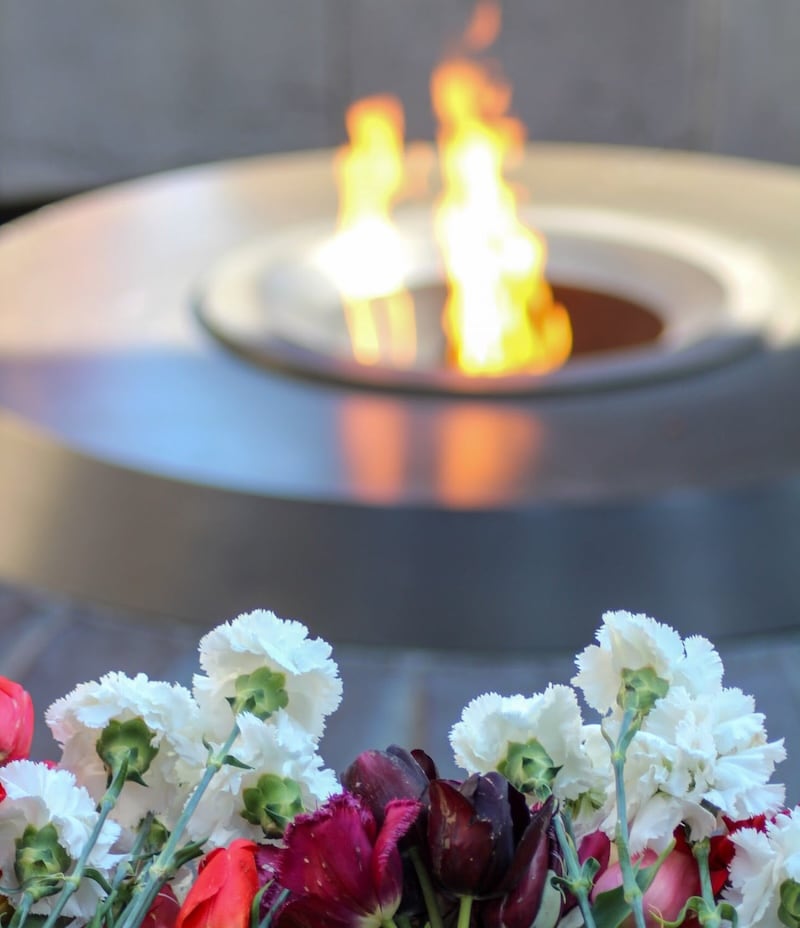
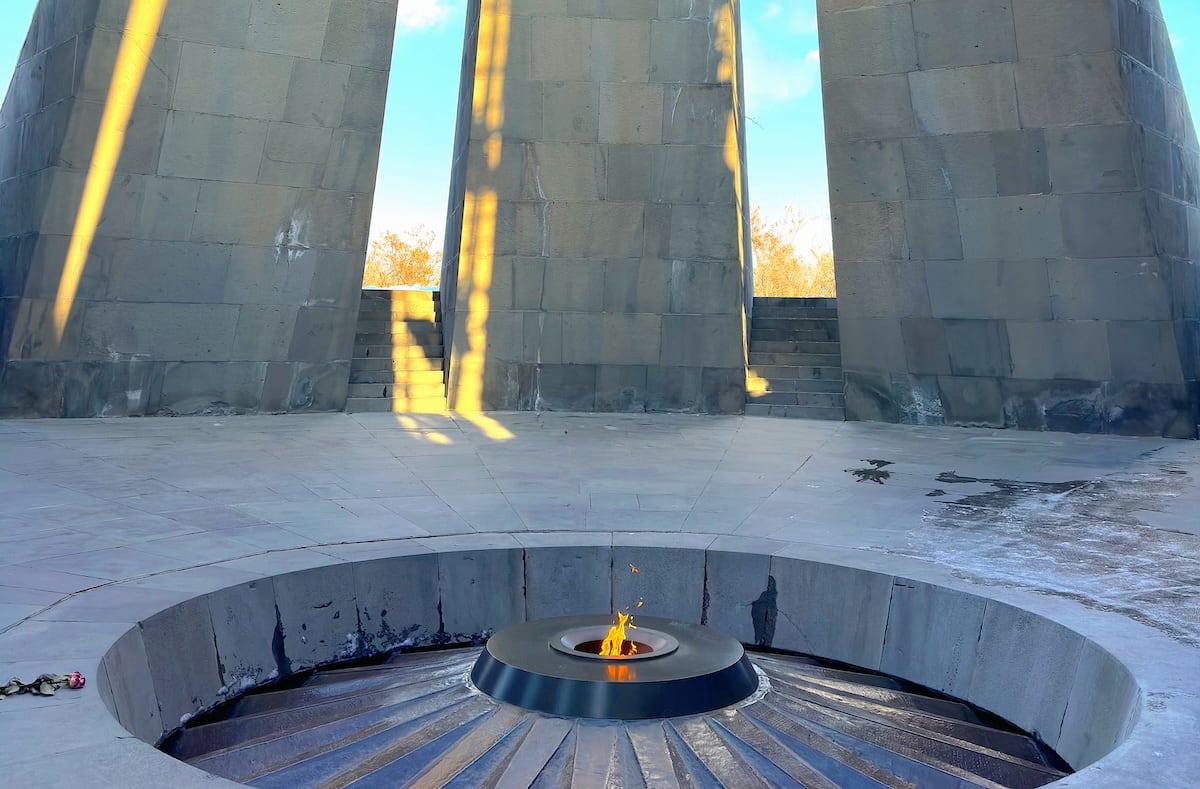
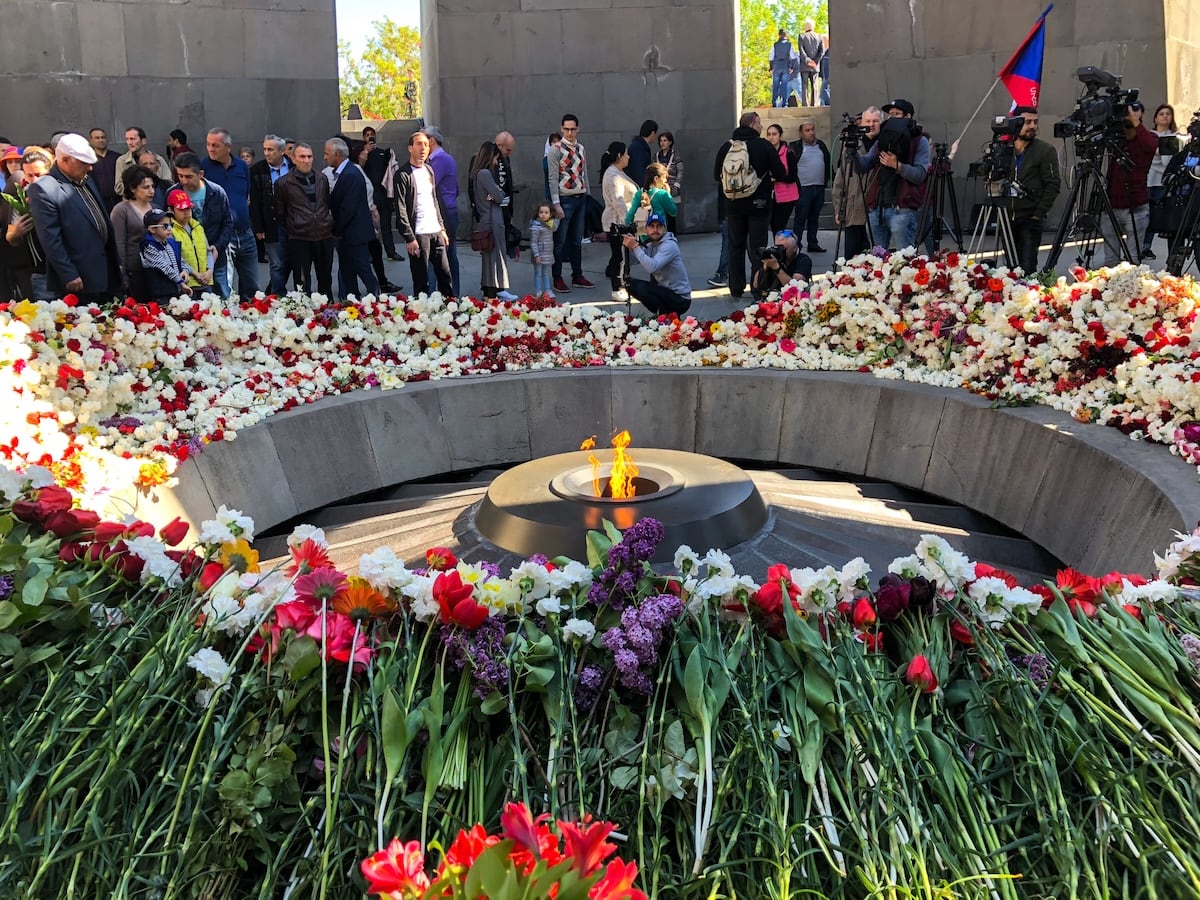
At the heart of the complex are the Temple of Eternity and a pointed column rising 44 meters (≈ 144 feet). The temple’s stone slabs angle inward toward an eternal flame, burning in remembrance.
Every year on April 24, Armenia marks Genocide Remembrance Day, and tens of thousands of people walk to the Tsitsernakaberd Genocide Memorial Complex to pay their respects.
That day also includes the Torchlit March (Torch Procession), which typically begins at Republic Square and continues toward Tsitsernakaberd in honor of the 1.5 million victims of the 1915 genocide.
So, if you’re planning to visit Tsitsernakaberd on April 24, be aware that access can be very challenging, the area can be extremely crowded, and the visit may take much longer than usual.
If you still want to go that day, I’d recommend visiting early in the morning to avoid the largest crowds.
You can descend the broad stone steps into the inner space, which feels quiet, enclosed, and deeply immersive.
Entering Tsitsernakaberd (What to Expect on the Grounds)
Upon ascending the complex from the parking lot below, visitors are greeted by a lush, forested area leading to the complex’s various monuments, a particularly beautiful sight in winter, with each tree topped with fresh snow.
What is known as an “alley of trees” lines the walk toward the monuments, many of which were planted in remembrance of those who perished at the hands of foreign heads of state or dignitaries.
After emerging from the alley of trees, to the immediate right is the Armenian Genocide Museum-Institute, which houses a variety of artifacts and other multimedia materials related to the events of the Genocide, including manuscripts, books, letters, and other records of events.
This Yerevan museum is important because the artifacts offer a comprehensive historical overview.
Pro Tips
- If you want the best city + Ararat view, aim for a clear day and give yourself time to linger at the viewpoint.
- In winter, expect snowpack on parts of the grounds (especially near the memorial wall).
- If you’re short on time, the easiest plan is: rideshare → museum → viewpoint → eternal flame.
History of Tsitsernakaberd
Following significant changes to Soviet policy in the 1950’s, the efforts of leading intellectuals to establish a memorial complex dedicated to the events of 1915-1918 culminated in a competition for the ideal design of the memorial.
The Soviet-Armenian government adopted a resolution to establish a competition open to all for the best design, with 69 participants submitting various designs.
A council led by the state’s construction agency was established to evaluate designs and select a winner, resulting in the selection of a design by architects Arthur Tarkhanyan and Sashur Qalashyan.
Approximately two years later, on November 29th, 1967, the memorial complex was opened, coinciding with the 47th anniversary of the establishment of Soviet rule in Armenia.
Later in 1995, the complex was expanded with the creation of the Armenian Genocide Museum-Institute, which houses historical artifacts and multimedia exhibits and is open to the public.
Things to Know About the Armenian Genocide
Because of the Armenian Genocide, approximately 1.5 million Armenians were killed by the Ottoman Empire and the Young Turks.
- The Ottoman Empire (The State): This was the declining world power where the genocide occurred. Once a diverse empire, its government shifted from traditional monarchic rule to radical nationalism in its final years.
- The Young Turks (The Political Party): This was the “Committee of Union and Progress” (CUP), a revolutionary group that seized control of the Empire. They moved away from inclusive “Ottomanism” toward a “Turks-only” ideology, which fueled the targeting of minorities like Armenians.
- The Three Pashas (The Masterminds): These were the three dictators who held absolute power during World War I:
- Talaat Pasha: The primary architect; he ordered the deportations and killings.
- Enver Pasha: The military leader who blamed Armenians for losses on the Russian front.
- Djemal Pasha: The military governor who oversaw the brutal deportations into the Syrian desert.
How to Visit Tsitsernakaberd Armenian Genocide Memorial in Yerevan FAQ
Is Tsitsernakaberd free to visit?
- Yes — the memorial grounds are free, and the museum entry is also free (donations are welcome).
How long should I plan for Tsitsernakaberd?
- Plan 1–2 hours for the memorial grounds, or 2–3 hours if you also want to visit the museum.
Can you see Mount Ararat from Tsitsernakaberd?
- On a clear day, yes — Tsitsernakaberd can include views of Ararat in the distance.
What’s the easiest way to get to Tsitsernakaberd from central Yerevan?
- A rideshare taxi (Yandex or gg) is the most accessible and takes you directly to the base of the complex.
Are guided tours available at the museum?
- Yes. Armenian tours are 5000 AMD per person, and English/Russian/French/German tours are 7000 AMD per person.